Talking Product Ads: Turn Your Product Into the Character That Sells It
Most brands using the talking-object format use it for reach — a funny potato, a dramatic router, a lot of views, no sales. That is a waste of a good format. The mechanic that makes a talking potato impossible to scroll past works just as well when the object doing the talking is the thing you sell.
This post is not about the trend itself. If you want that, start with how to make a talking object video or the background on why objects are suddenly talking on TikTok. This is about pointing the format at a buyer: which ad angles actually sell, how to structure a selling script, where to run it, and the lines you should not cross.
Why a product that speaks for itself beats a voiceover about it
Every product video has the same problem — keep the product on screen while something interesting happens. Most formats solve it badly. A voiceover talks about the product while the camera hunts for something to look at. A creator holds it up for two seconds and then the ad is about the creator's face.
A talking product ad collapses that. The product is the character, so it is on screen for the full runtime, and the interesting thing happening is the product. There is nowhere else to cut to.
It also changes who is making the claim. "This serum absorbs fast" is marketing copy. "I absorb in about thirty seconds, so stop waiting around before your sunscreen" is a character with an opinion. Same information, far less resistance — people argue with advertisers and listen to characters.
And it is cheap to be wrong: no creator, no shoot, so a losing angle costs minutes instead of a week. None of which makes the format automatically effective. It buys attention and lowers resistance; what you say in the ten seconds still decides whether anyone buys.
First, decide which version of your product should talk
This is the part people get wrong, and it decides which tool you reach for.
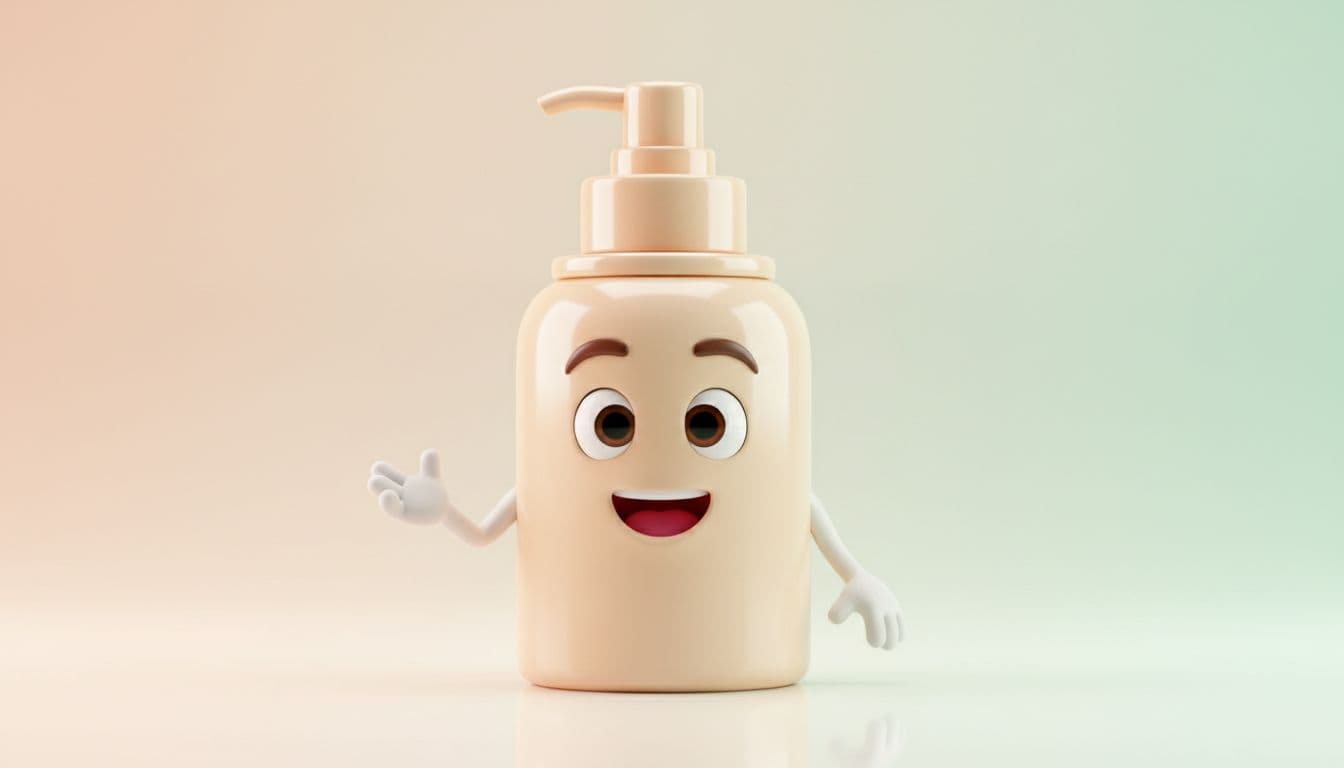
The Talking Objects studio is text-in. You type what the object is — up to about 48 characters, so amber glass serum dropper bottle fits — and it generates a stylized, expressive character version of it. What you get is a character, not a photograph of your exact SKU with your label on it. Your bottle becomes a bottle-shaped personality.
The product ad generator is photo-in. You upload your real product photo and get a UGC-style talking ad built around the actual item a buyer will receive.
That maps onto the funnel. Use the character at the top — cold traffic, hooks, feed content, where the job is to stop the scroll and nobody is inspecting your label yet. Use the real photo at the bottom — product pages, retargeting, marketplace listings, anywhere the buyer needs to recognize the exact item that will arrive in the box.
The strongest setup runs both: a character ad that earns attention, and a real-photo product ad that closes. If your product photography is not good enough to carry the closing ad, fix that first in the product photo studio — a talking ad built on a weak photo is a weak ad with a mouth.
Give your product a voice
Type what your product is, pick the scenario, and get a talking video plus a caption for every platform — pay-as-you-go credits, no subscription required.
Open the Talking Objects studioThe four angles that actually sell
Funny gets views. These four get carts. Each one takes a job a sales page normally does and hands it to the product.
1. The objection-handler
Your product answers the single question that stops people from buying. Not the flattering question — the real one, the one in your support inbox and your returns notes.
An objection answered by the product itself sounds like candor instead of defensiveness. A brand insisting "actually, it's great value" is an argument. A small bottle saying "yes, I'm small, here's why that's fine" is a character being honest, and honesty is disarming. Read your last fifty support tickets, find the question that recurs, and you have your first script.
2. The comparison
Your product against the cheap alternative — the category, never a named brand. It makes the case for why the thing that costs more is the thing that lasts, fits, or works.
Keep it specific. "Better quality" persuades nobody; a material, a weight, a rating, a warranty, a lifespan do — and they are defensible if challenged. Comparative claims draw complaints more than any other kind, so each should be something you can point at a spec sheet and prove.
3. The how-to-use
The product explains the right way to use it, usually by correcting the common mistake. The most underrated of the four: it earns saves and shares like an educational video, and it quietly reduces refunds, because a large share of "it didn't work" is really "I used it wrong." It is also the safest angle in regulated categories, since you describe usage rather than promise outcomes.
4. The unboxing, from the product's side
Standard unboxings are shot from the buyer's perspective. Flip it: the product narrates being opened — inside the mailer, dark, hearing the tape, introducing itself.
It works best when your product has a physical quality that photographs poorly but matters — weight, thickness, texture, density. The product simply tells the viewer what it feels like, which a photo cannot do and a spec table does not sell.
How to structure a selling talking-object script
The entertaining version of this format is a hook plus a fun fact. The selling version needs a fourth beat and a tighter middle. Four beats, roughly ten seconds:
- In-character hook (0–2s). The product states its situation, in the first person, using the buyer's words. No brand name yet. No "hi, I'm."
- The stake (2–4s). Why the viewer should care — the mistake they are probably making, or the objection they are probably holding.
- The turn (4–8s). The specific, provable thing about your product that resolves it. This is the only place a real claim belongs, and it should be concrete enough to verify.
- The ask (8–10s). One soft instruction — "Check the label." "Wash me cold." A gentle imperative beats "buy now" here, because the character has been talking like a friend for eight seconds and should not suddenly become a banner ad.
Three craft rules that come from how the format actually renders:
- Write for a face, not for choreography. The studio animates an expressive still with matching lip movement, not a motion-graphics cartoon — so a joke that depends on the product sagging, jumping, or walking across frame will not land. Put the comedy in the voice and the expression.
- Stay under roughly 320 characters. That is the studio's script cap, and it is deliberate: it lands around ten seconds, the length that loops. Forty-five words is plenty.
- One claim per script. Three good selling points is three ads, not one crowded one — and testing them separately is the only way to learn which your buyers respond to.
Four full example scripts
Original, usable, and written to the constraints above — each demonstrating a different angle.
Skincare — the objection-handler. Character: a small amber glass serum dropper bottle, mildly defensive.
"Yes. I'm small. That's the entire point — you only need three drops, so I last about two months. Keep me out of direct sun, cap me properly, and I'll still be doing my job on the last day."
Supplement — the how-to-use. Character: a matte black magnesium tin, deadpan, on a nightstand.
"Most people take me at completely the wrong time. I am not a pre-workout. Evening, with a little food, is what I'm for. And check which form you've actually got — it's on the back of the label, where nobody ever looks."
Notice what that script does not do. The obvious version ends with "take me and you'll sleep better" — a health claim you would have to substantiate. Cutting it costs the script nothing and keeps you out of trouble.
Home decor — the comparison. Character: a solid oak floating shelf, unbothered.
"The last shelf you bought was particle board. It held your books for about a month and then bowed in the middle. I'm solid oak on a steel bracket, rated to fifteen kilos. Hang me once and go do something else."
Apparel — the unboxing. Character: a heavyweight cotton hoodie, still inside the mailer.
"It's very dark in here. Oh — you're opening me. Fair warning: I'm four hundred gram cotton, so I'm heavier than you're expecting. That's on purpose. Wash me cold and I'll keep this shape for years."
Each follows the same shape: a first-person hook, a stake, one provable specific, a small instruction. Swap in your product's real numbers and you have your first four ads.
Where talking product ads run
The format is vertical and around ten seconds, so it is native almost everywhere — but the angle should change by placement.
- TikTok Shop. The best fit of the four. Character-led, obviously native to the feed, and the objection-handler does well against an audience deciding in seconds. Set it up on the TikTok Shop video generator, and raid these TikTok Shop ad hooks for opener variations.
- Meta ads. Run the character version as the cold-traffic hook and a real-photo ad for retargeting. Variations are quick to generate, making this the cheapest place to learn which angle your buyer responds to — the same rapid-variation approach behind the dropshipping video ad generator.
- Shopify product pages. An on-page video answering the top objection does sales work at the moment of hesitation. Use the real photo here, not the character — that is what the Shopify video ad generator is for, and product video ads vs static images covers when video should support your photos rather than replace them.
- Amazon listings. Be careful. Shoppers there are in comparison mode, and the listing video is closer to a spec demonstration than feed entertainment — a whimsical mascot can read as unserious next to competitors showing the product plainly. Use the Amazon product video generator for the literal version, and save the character for the social traffic you send to Amazon.
Selling across several at once, the e-commerce video ad generator and the broader product video ad generator cover the multi-channel setup. If you would rather a human presenter delivered the same script, that is a UGC avatar video — same structure, different messenger.
Turn your real product photo into an ad
Upload one product photo and generate a UGC-style talking ad — no filming, no actors.
Create a product adThe honesty rules, which matter more here than anywhere else
Put a face on a bottle and it is easy to forget you are still running an advertisement. You are. A costume does not change the status of a claim — regulators and ad reviewers read the words, whether they came from a spokesperson, a caption, or a cartoon jar.
Treat these as hard rules:
- The character can be dramatic. The claim cannot. Personality belongs in the delivery — exasperated, smug, deadpan. The factual content should be as boring and defensible as a spec sheet. A shelf can be theatrical about a fifteen-kilo rating; it cannot be theatrical about a rating you invented.
- Supplements and skincare need the tightest leash. Anything edging toward treating, preventing, or curing a condition carries a different evidence burden, and "my product said it, not me" is not a defense. Describe what the product is, what is on the label, and how to use it. Leave outcomes alone unless you have real substantiation and have checked the rules for your market.
- Compare to a category, not a competitor's name. "The cheap particle-board one" is fair comment. Naming a brand invites a complaint, and the persuasive work is identical either way.
- Never let a talking product imitate a customer. A product describing its own material is fiction everyone understands. A product saying "customers tell me I changed their skin" is a fabricated testimonial — the fastest way to lose an ad account. For real customer proof, use real customer words in a review-led format.
- No fake urgency or invented numbers. A character voice makes "almost sold out" feel playful. It is still a false statement if it is not true.
The practical test: strip the character out, read the sentence as flat brand copy, and ask whether you would put it on the product page. If it would not survive there, it does not survive in a costume.
When not to use this format at all
Whimsy is a trust tax in some categories. Skip talking product ads when:
- The purchase is high-consideration or expensive. Furniture, mattresses, electronics above a few hundred dollars. The buyer is researching, and a cartoon undercuts the seriousness they want. Use it to introduce the brand, not to close.
- Your positioning is luxury or premium. The 3D animated look is warm, bright, and mass-market — very good at "approachable," very bad at "restrained." Premium buyers read production style as a signal about the product.
- The category is regulated or trust-first. Medical devices, financial products, anything health-adjacent, anything a professional buys. The format's charm is that it is not serious, which is precisely the wrong note.
- The buyer must inspect the actual item. Jewelry, apparel fit, anything where color and texture decide the sale. A stylized character hides the thing they need to see.
- Your audience already knows you. Returning customers do not need charming into caring; they need a reason to reorder. Straight, real-photo ads outperform novelty there.
The honest summary: this is an attention tool that also happens to sell. When attention is your bottleneck, it is excellent. When trust or inspection is your bottleneck, reach for something else.
Run your first test this week
Do not build a strategy. Build four ads and let the traffic tell you.
Pick your biggest objection and write an objection-handler. Write a how-to-use around the mistake customers make. Take both through the Talking Objects studio — type your product, pick the scenario, approve the character, choose a voice, and it renders the video with a caption for each platform. Then build the real-photo counterparts in the product ad generator for the product page and retargeting.
Run the character ads cold and the real-photo ads warm, changing one variable at a time — same product, same offer, different opening line. The full workflow is in how to create video ads with AI.
Cost is not the obstacle. No subscription: a credit for the scenario, two credits per character image, one per second of video, one per platform caption. Packs start at $5 and never expire.
Still short on concepts? The talking object video ideas list is built for reach rather than revenue, but the scenario shapes adapt easily to a product — and if you sell anything edible, talking food videos are the strongest sub-niche. To put a real person or pet on camera instead, that is the talking photo studio.
Your product already has everything a good character needs — a job, an opinion about how people misuse it, and a reason it costs what it costs. Give it a voice in the Talking Objects studio, then let the real thing close the sale.
Make your product the character
Give your product a voice and a script that sells — then turn your real product photo into the ad that closes.
Create a product ad