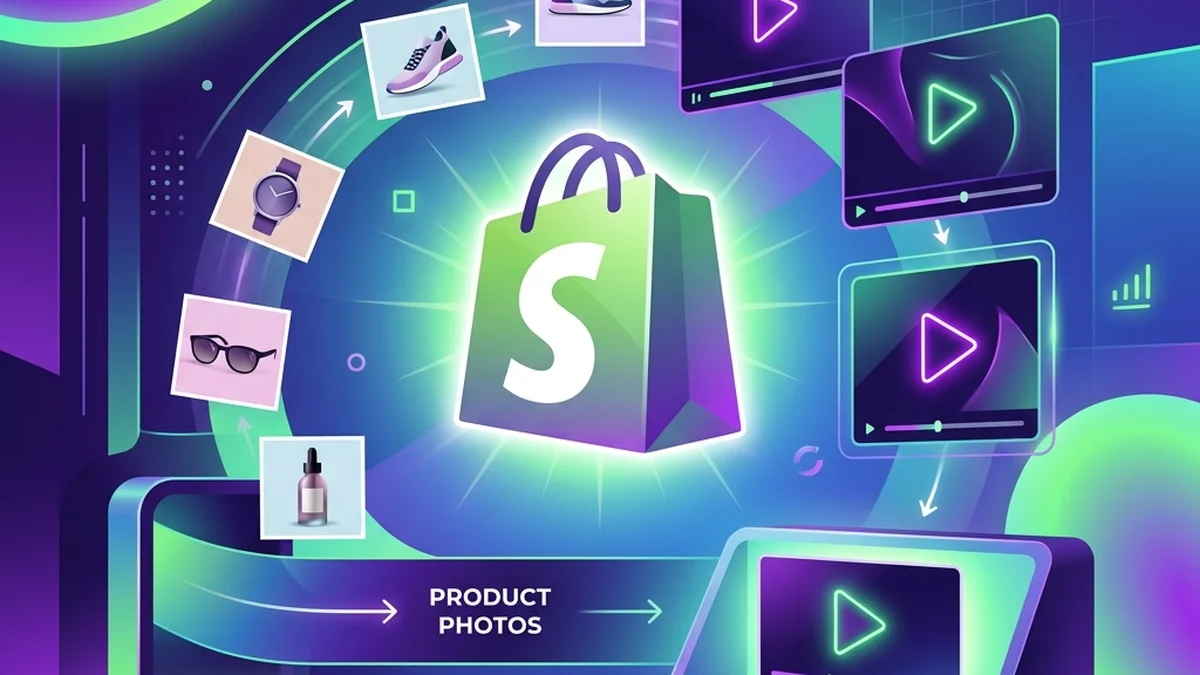
How to Turn a Product Photo into a Video Ad

Most ecommerce teams already have product photos. The gap is turning those photos into short videos that explain the product, test hooks, and create a reason to click. A product-photo-to-video workflow keeps that simple: start with one clear image, write the buyer problem, then generate a short video that sells one idea — no camera, no actors, no editing timeline.
Here is exactly what that looks like, from picking the image to shipping the variations you can actually test. If you want to try it as you read, open the product video ad generator in another tab.
That clip started as a single product photo. No shoot, no creator booked — the AI composed a creator holding the product and talking about it. That is the whole idea: one image in, an ad-ready vertical video out.
Start with the right product photo
The product needs to be recognizable at phone size, because most ad views happen in a fast scroll. Use one main product, clean lighting, and a crop that leaves enough room for a vertical 9:16 frame. If the product has a key detail — packaging, texture, a feature — make sure it is visible before you upload.
Good source images usually have:
- One clear product or bundle, not a cluttered flat lay.
- Even lighting with no harsh shadow across the item.
- A visible feature, texture, shape, or use case.
- Enough contrast that the product pops in a busy feed.
If your photos need cleanup first, an AI product photo studio can re-stage the same item on a clean white, marble, or lifestyle background — and the best product photos for AI video ads covers what to fix before you generate.
Write one job for the video
A short video cannot explain everything, and trying to is the most common reason first ads flop. Pick a single job per video:
- Explain what the product does in one sentence.
- Show why it makes a good gift.
- Answer the one objection that stops checkout.
- Turn a real customer review into social proof.
- Test a hook angle for paid social.
For broad ecommerce, the ecommerce video ad generator is the best starting point. For platform-specific pages, use Shopify video ads, Etsy product videos, Amazon product videos, or TikTok Shop videos.
A script structure that converts
AI handles the voice and delivery, but the words are yours, and short beats clever. A reliable structure for a 10–20 second ad:
- Hook (first 2 seconds): name the buyer or the problem. "If your morning coffee goes cold before you finish it…"
- Middle (one benefit): the single detail that matters. "…this mug keeps it hot for six hours, no base, no cord."
- Close (one reason to act): a light nudge. "Link's right here."
Keep sentences short. A viewer scrolling a feed does not know your brand yet, so the opening line has to earn the next two seconds. For dozens of ready hook formulas you can paste in and adapt, the UGC hook ideas for product video ads post is a swipe file — and if you want the whole script pre-built, not just the hook, the video script templates library has fill-in-the-blank structures by product type.
Generate more than one version
Do not stop at one video. The first version proves the product can work in video. The next versions teach you which angle gets attention. From the same photo, spin up:
- A problem/solution version.
- A benefit-led version.
- A product-page explainer.
- A review-style read as social proof.
- A gift or seasonal angle.
Because you are not booking a shoot, the cost of trying another idea is close to nothing — which is the entire advantage over traditional production. How to run that test loop without wasting budget is covered in creative testing for paid ads.
Turn one product photo into a video ad
Upload one product photo — get a UGC-style talking video ad, no filming needed.
Create a product adCommon mistakes to avoid
A few things quietly kill an otherwise good ad:
- Cramming three messages into one video. One job per clip. Make a second video for the second idea.
- A slow opening. If the product or the problem is not clear in two seconds, the scroll wins.
- A cluttered source photo. The AI works from what you give it; a clean, recognizable product photo produces a cleaner, more believable ad.
- Faking proof. Do not invent testimonials. If an AI voice reads a customer review, present it as a video read of a real, written review — honest ads convert better over time and stay clear of platform review.
Where to use the finished MP4
One AI-generated MP4 can work across your whole funnel with small script tweaks:
- Product page gallery — a concise explainer near the images; these product page video examples show how stores place them.
- Organic TikTok, Reels, and Shorts.
- Paid social and retargeting.
- Email, launch, and cart-recovery flows.
A product page needs clarity; TikTok and Reels need a faster hook; email needs a reason to click back to the store. If you are still weighing whether video is worth it over your current images, product video ads vs static images makes the case with what changes in the metrics, and how to create video ads with AI walks the end-to-end workflow.
The big advantage is repeatability: once one product photo becomes a useful video, your whole catalog has a path to video creative — on demand, for the price of a coffee instead of a production budget. And if you are running the store solo, the small-business guide to AI product video ads shows how to keep that system going without a marketing team.