How to Make Instagram Reels With AI (Without Filming Anything)
Reels reward volume, and volume is exactly what filming refuses to give you. Every clip you shoot needs a location, usable light, a version of yourself that's presentable, and twenty minutes you didn't plan for. Try to post four a week and the camera becomes the bottleneck — not the ideas.
That's the gap AI closes. You can now build a finished vertical Reel from a single photo, a product shot, or one sentence describing a scene, and the result sits in the feed without announcing itself as generated. This guide covers how to make Instagram Reels with AI end to end: the four formats that actually work, which tool fits each, how to frame and hook them, and a weekly workflow one person can sustain.
The four AI Reel formats that work
"AI Reels" isn't one thing. There are four distinct formats, and choosing the wrong one is the most common reason a generated Reel lands flat. Match the format to what your video is doing.
1. The talking spokesperson Reel — from one photo
A person on screen, talking to camera, delivering a point. This is the workhorse format for coaches, consultants, agencies, local businesses, and anyone whose product is their expertise.
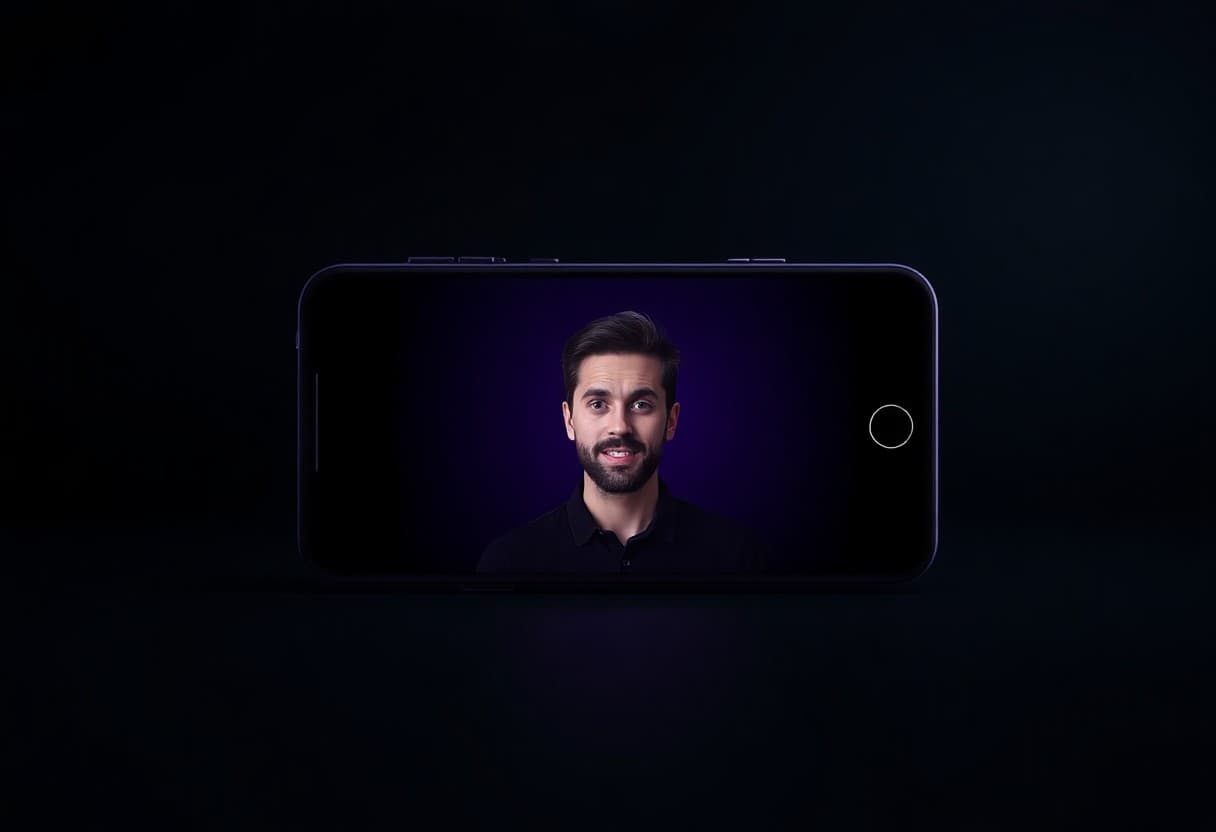
You need exactly one good photo. Upload a sharp, front-facing headshot to the talking photo studio, add a script or a voice recording, and the engine animates the face with lip sync that tracks the words. Nothing is filmed. If you want the mechanics in detail, how to make a talking avatar video walks through the whole flow, and the AI avatar generator page covers using a generated presenter instead of your own face.
Use it for: explainers, myth-busting, announcements, FAQ answers, "three things I'd tell my younger self" style posts. The talking head generator is the same engine framed for straight-to-camera delivery, and UGC avatar video is the version tuned to look like a creator review rather than a corporate spot.
2. The prompt-to-video B-roll Reel
No people. Just a beautiful moving shot — coffee pouring in macro, a drone pass over a coastline, ink blooming in water, a product rotating under studio light.
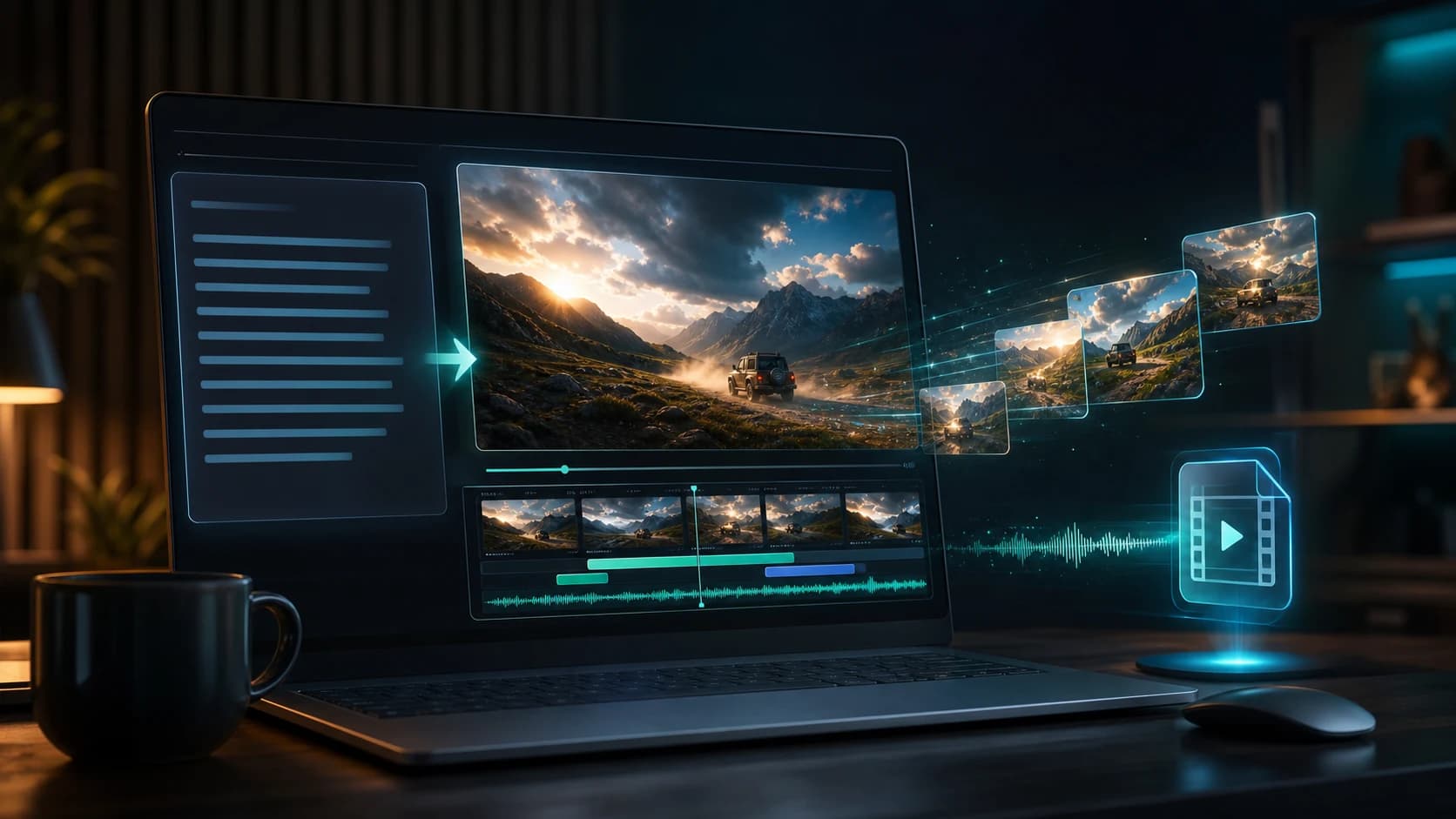
Here you describe the shot in words and the model renders it. Open the AI video generator, write the scene, set the aspect ratio to 9:16, and render. The prompt structure that reliably works is subject + action + setting + camera + light + sound, and 10 AI video prompt examples has ten you can paste in and modify. The text to video AI guide covers what the models are genuinely good at versus where they still struggle.
Use it for: atmosphere posts, text-over-video quotes, hook footage for a carousel-style Reel, and cutaways inside a longer talking Reel. Browse the AI video examples gallery to calibrate what a good prompt returns before you write one.
The constraint: think shot, not film. These render as single continuous clips of a few seconds, so a B-roll Reel is usually two or three cut together, not one long take.
3. The talking-object Reel — the viral format
An everyday object gets a face, a personality, and opinions. A houseplant complaining about your watering schedule. A router explaining why it keeps dropping. A jar of protein powder with strong views on your morning.
This one earns its own tool because the hard part isn't the video, it's the writing. The Talking Objects studio takes an object name, generates several scenario options with characters and short first-person scripts, renders the 3D animated still, animates it speaking, and writes a caption per platform. How to make a talking object video breaks down each step.
Use it for: reach. This format travels further than it has any right to — a face plus a voice plus a joke is hard to scroll past, and one real fact inside the joke earns the share. It renders vertical by default, so there's no reformatting step.
4. The product Reel — from product photos
You sell something physical and you need the actual item on screen, accurately, without a photoshoot.
The product video ad generator starts from a product photo, builds the scene from your real product rather than inventing a lookalike, and makes a short ad around it. Its shape control starts on "Vertical · 9:16" for Instagram, and the scene is composed in that shape — so the finished ad really is vertical. For the writing half, UGC hooks for product video ads is the most directly useful companion, and faceless video ads covers the broader case for keeping yourself off camera entirely.
Use it for: launches, restocks, bundle offers, and hook testing — five versions of the same product with five different opening lines.
Vertical 9:16 is not a preference
Every Reel is 9:16. Not "ideally." A square or landscape clip gets letterboxed with dead bars, and dead bars read as reposted-from-somewhere-else before a viewer consciously registers why.
Set the ratio at generation time, not in an editor afterward. Cropping a 16:9 render down to vertical throws away most of the frame and usually decapitates your subject. In the AI video generator that's a single toggle before you render; in the product-ad flow it's the default; in the Talking Objects studio it's already vertical.
Keep your subject out of the interface
Instagram draws its own interface on top of your video. The exact positions shift as the app changes, but the durable shape of it doesn't: there's a strip along the top for status and navigation, and a much heavier zone along the bottom and right edge where the username, caption, audio credit, and action buttons live.
Two rules that survive redesigns:
- Faces sit in the upper-middle of the frame. Not dead center, and never low. If your subject's mouth is in the bottom third, a caption line will eventually cover it.
- Burned-in text stays out of the bottom quarter and off the right edge. Put your on-screen text in the upper-middle band where the frame is clean.
Then check it in the app. Hold at the preview screen and look at your subject with the real interface drawn over it — thirty seconds of checking beats reposting.
Write the first two seconds like they're the whole video
Almost every Reel that fails, fails immediately. The viewer's thumb is already moving; your opening line is competing with momentum, not with other Reels.
A hook does one of four jobs: contradicts something the viewer believes, promises something specific, opens a gap they need closed, or names them directly so they know it's for them.
Contradiction
Everyone told me to niche down first. It cost me a year.
You're not bad at this. You're doing step two before step one.
Specific promise
Three things I'd change about your homepage in under a minute.
Here's the exact sentence I use when a client asks for a discount.
Curiosity gap
This is the cheapest thing in my kit, and it's the one I'd replace first.
I nearly deleted this account in March. Here's what changed.
Direct address
If you've ever rewritten the same email four times, this is for you.
Don't buy one of these until you've checked the underside.
First person, for talking-object Reels
I'm the smoke alarm in your hallway, and we need to talk about that battery.
Nobody warned you about me.
Three things make these work. They're concrete — "a year," "four times," "the underside" — because specificity reads as true. They start mid-thought, with no throat-clearing intro. And none of them are a greeting; "Hey guys, so today I wanted to talk about" is four wasted seconds you don't have.
If writing openers cold is the part that stalls you, the video script templates give you fill-in-the-blank structures, and video script examples shows full scripts you can adapt.
Make your first AI Reel
Turn one photo, one product shot, or one sentence into a vertical video. One-time credits, no subscription required.
Open the studioAssume the sound is off
Not as a statistic — as a design constraint. People scroll Reels in waiting rooms, on transit, in bed next to someone asleep, and at work. A meaningful share of the people who see your video will never hear a word of it.
This has three concrete consequences for how you build an AI Reel:
Put the hook on screen as text. Whatever your first spoken line is, it should also be readable in the frame. That single habit converts more muted viewers than any other change.
Caption everything. Auto-generated captions mangle names, product terms, and anything domain-specific. Read them before you post and fix the words that matter. If your Reel is a talking photo delivering a scripted message, you already have the exact text — paste it rather than trusting auto-transcription.
Write scripts that survive muting. If your video is a person talking and the visual is a static face, a muted viewer has nothing. Give them something: on-screen text that advances, a cut to B-roll, a number, a list that builds. This is the strongest argument for mixing formats — a talking-avatar hook cut against two shots from the AI video generator works muted, where either alone does not.
A weekly workflow one person can actually run
The mistake is making Reels one at a time. Every session carries fixed overhead — deciding, opening tools, finding photos, getting into voice — and paying it four times a week is what makes people quit by week three. Batch instead: one session, four Reels, roughly ninety minutes.
Block 1 — Angles (20 minutes, no tools open). Write four one-line ideas. Not scripts. Just angles: a mistake you see constantly, a question you answered in DMs this week, something you changed your mind about, one product or offer. Assign each a format from the four above.
Block 2 — Scripts (25 minutes). Write four scripts of 40 to 90 words. Lead with the hook, one idea per video, end with a specific next step. Read each aloud once and cut whatever makes you stumble — a sentence you trip on is a sentence a viewer will too. Start from video script templates if a blank page is the obstacle.
Block 3 — Generate (30 minutes). Run all four through the right studios back to back. Talking pieces through the create page, scenes and B-roll through AI video from text, object clips through the Talking Objects studio, product clips through the product-ad flow. Batching here matters because renders queue in the background — start the next one while the previous is still working.
Block 4 — Ship (15 minutes). Captions, cover frames, on-screen text check, safe-zone check, schedule. Write the caption's first line to do the same job as your hook, since it's what appears next to the video.
Two habits make this compound. Keep a running notes file so Block 1 is a selection problem, not a creativity problem. And when a Reel does well, remake it in a different format rather than reposting — a talking-avatar explainer that landed becomes a talking-object version and a B-roll-plus-text version, and you learn which format your audience responds to.
The honest limits
AI is not a substitute for your face when the brand is you. If you're building a personal brand, people are subscribing to a person — the specific way you talk, the unrehearsed moments, the fact that you clearly exist. AI Reels are excellent for the volume layer around that: explainers, product clips, formats where the messenger doesn't need to be you. They're a poor substitute for the layer that makes people care. Use AI for most of your output and a real camera for the posts that build the relationship.
Lip-sync from a still photo works best in shorter cuts. A still image has one pose. The engine moves the mouth convincingly, but a photo can't shift its weight, gesture, or glance away the way a filmed person does. In short cuts nobody notices; hold on the same still for a long stretch and the stillness starts to read. Keep talking-photo segments brief and cut to something else — B-roll, text, a product shot. The YouTube channel intro from a photo guide models how tight these should be.
Generated video is weak at exact text and logos. Don't ask a prompt-to-video model to render your brand name or a price in-frame. Add that as an overlay afterward, where you control it.
Don't present generated footage as documentation. Atmosphere, illustration, and a spokesperson delivering your own words are fine. A generated clip passed off as real footage of a real event is not — and Instagram's rules here aren't worth testing.
What it costs
TalkPix uses one-time credit packs starting at $5. The Mini pack includes 50 credits, and a 10-second 720p Talking Photo video uses about $1 in credits. Payment is required before generation; a subscription is not required, and credits never expire.
The per-format math: talking videos are 1 credit per second at 720p; prompt-generated clips on Seedance 1.5 Pro run 4 to 12 seconds and cost 1, 3, or 5 credits per second at 480p, 720p, and 1080p. A week's batch of four Reels lands at a few dollars, which is what makes testing four hooks instead of betting on one viable.
Start with one Reel
Pick the format that matches what you're trying to say, set it to 9:16 before you render, write two seconds worth of hook, and assume nobody can hear it. That's most of the job. Make one this week, then make the second one faster.
Make an Instagram Reel with AI
Pick a format, set it to 9:16, and render a post-ready vertical video today — pay-as-you-go credits, no subscription required.
Open the AI video generator