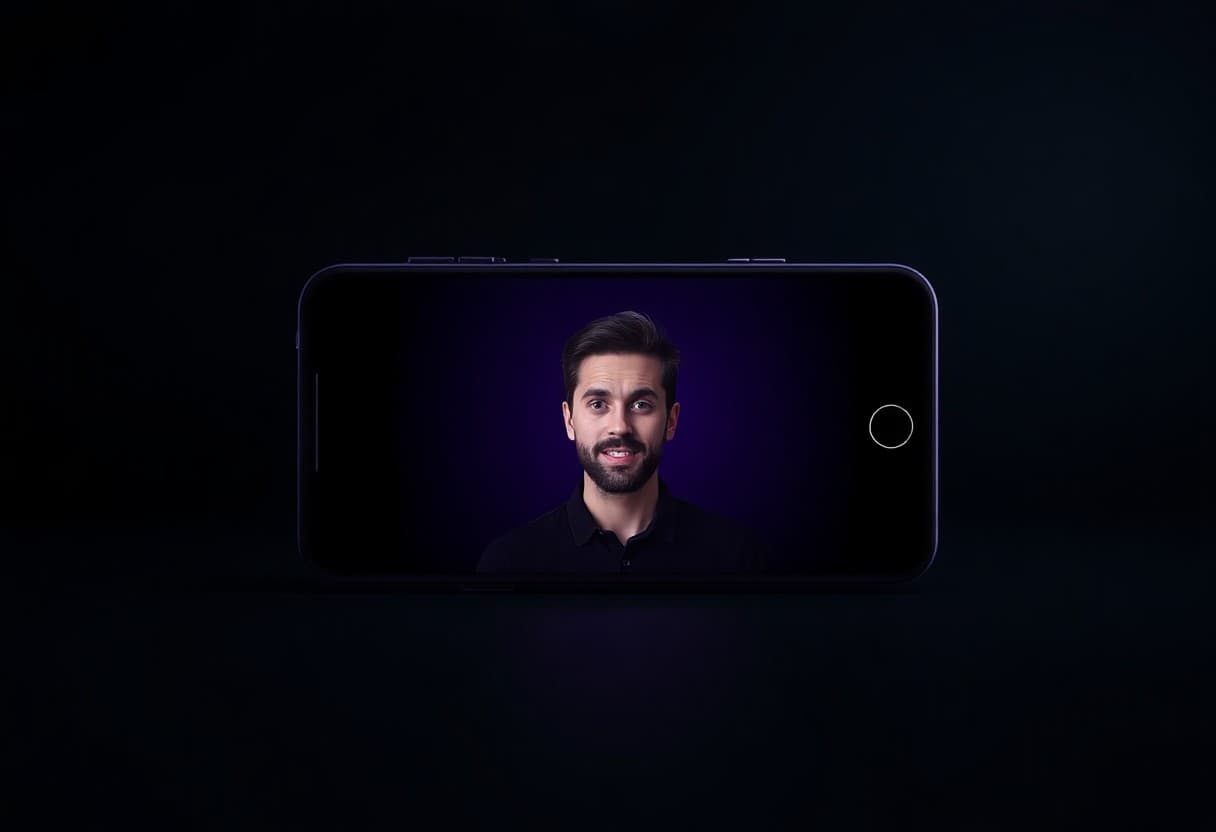
Talking Photo vs Deepfake: What's the Difference and Is It Safe?

You want to turn a photo into a short talking clip — maybe of yourself, maybe of a character you drew, maybe your brand mascot. But right before you hit "create," a worry stops you: isn't this basically a deepfake? And if it is, is that even okay to make?
It's a fair question, and you deserve a straight answer. The short version: a talking photo and a deepfake can use similar technology, but they are not the same thing. The difference isn't the tech — it's consent and intent. Let's walk through it plainly so you can decide for yourself.
Is a talking photo a deepfake?
Not usually — but it depends entirely on how it's used.
A talking photo animates an image so it appears to speak words you wrote. You upload a photo you have the rights to, type or record a script, and get a short video where the face moves and lip-syncs to your audio. That's it. It's a creative and communication tool, the same category as animation, dubbing, or a cartoon avatar.
A deepfake, in the way most people mean it, is something narrower and darker: media that deceptively impersonates a real person without their consent — putting words in their mouth to mislead viewers, usually a public figure, an ex, or someone the maker wants to embarrass or defraud.
Notice what separates them. It isn't the model or the pixels. Both might animate a still face. The line is drawn by two questions:
- Consent — do you have the right to use this face?
- Intent — are you being honest about what the video is, or trying to trick someone?
A talking photo of yourself, saying your own words, shared openly, is on the safe side of both. A fabricated clip of a politician "confessing" to something they never said is on the wrong side of both. Same underlying tech, completely different acts.
Why consent is the whole game
Think about a simpler medium: a photograph. A camera can capture a loving family portrait or it can be used to secretly photograph a stranger. The camera doesn't decide which — the person holding it does. Animation tools work the same way.
That's why every responsible talking-photo tool starts from one rule: you must have the right to the face you upload. That means:
- A photo of yourself. Easy — it's you.
- A photo of someone who has clearly agreed to be animated (a client, a colleague, a friend who said yes).
- An image you own or created — an illustration, an AI-generated character, a mascot, a licensed stock image cleared for this use.
What it does not mean:
- A celebrity or politician you found online.
- A private person who never agreed to it.
- Anyone, real or public, made to say something designed to deceive.
If you're only ever animating your own face or images you clearly have rights to, you're not making deepfakes. You're making media, the same way a video editor or an illustrator does.
What "safe" actually means here
When people ask "is an AI talking photo safe," they usually mean two different things at once. Let's separate them.
TalkPix uses one-time credit packs starting at $5. The Mini pack includes 50 credits, and a 10-second 720p Talking Photo video uses about $1 in credits. Payment is required before generation; a subscription is not required, and credits never expire.
Is it ethically safe? That depends on you, and it comes down to the same two words: consent and intent. A talking photo you make of yourself to explain a product, greet customers, or narrate a lesson is not just safe — it's a completely normal use of a modern tool. The ethics only get complicated when someone tries to pass off a fabrication as real footage of a person who didn't agree.
How TalkPix draws the line
We're not neutral about this, and we don't want to be. TalkPix is built for the honest use case, and our terms say so directly.
To use the tool you must have the rights or consent to any photo you upload. And it explicitly forbids:
- Impersonation — animating a real person without their permission.
- Deceptive content — media meant to trick viewers into believing something false happened.
- Political manipulation — putting words in the mouths of public or political figures.
These aren't decorative rules. They're the reason a talking-photo tool can exist as a legitimate creative product rather than a harm machine. If your plan runs into any of those three walls, TalkPix is the wrong tool — and honestly, so is any responsible one.
Responsible, everyday uses
Here's the reassuring part: almost everything people actually want to do with a talking photo is squarely fine. A few common ones:
- Personal videos. Turn a photo of yourself into a birthday message, an announcement, or a quick hello when you can't film.
- Small-business marketing. Give your own face or your brand mascot a voice to explain what you sell. If you want the walkthrough, see how to make a talking avatar video.
- Teaching and training. Narrate a lesson or an onboarding clip with a consistent presenter — you.
- Family keepsakes. Animating an old photo of a relative, with your family's blessing, to hear a warm word again.
- Bringing your own art to life. Illustrators and creators animate characters they drew and own. That's not deepfaking anyone; there's no real person to deceive.
If you're new to the process, how to make a photo talk walks through it step by step, and if you're comparing options, the best talking photo apps covers what to look for.
A simple test before you create
When you're unsure whether a specific video crosses a line, ask yourself three quick questions:
- Do I have the right to this face? (My own, or someone who said yes, or art I own.)
- Would the person in it be okay with this video existing?
- Am I being honest about what it is — a created video, not secretly-real footage?
If you can answer yes, yes, and yes, you're on solid ground. If any answer is no, don't make it. That test is quicker than any legal page and it captures the whole spirit of using these tools well.
The bottom line
A talking photo isn't a deepfake because of the technology — it becomes one, or doesn't, based on whose face it is and why you made it. Animate your own photo, or an image you clearly have the rights to, be open about what it is, and you're using a creative tool exactly as intended. Try to impersonate or deceive, and you've crossed into territory that TalkPix's terms forbid and that no honest creator should want anyway.
TalkPix requires payment before AI generation. Eligible new customers can render their first Talking Photo — up to 20 seconds at 720p, typed script — for $1.99 one-time. Reusable credit packs start at $5 and credits never expire.